

European Heritage Days Officially Opened in Dotnuva
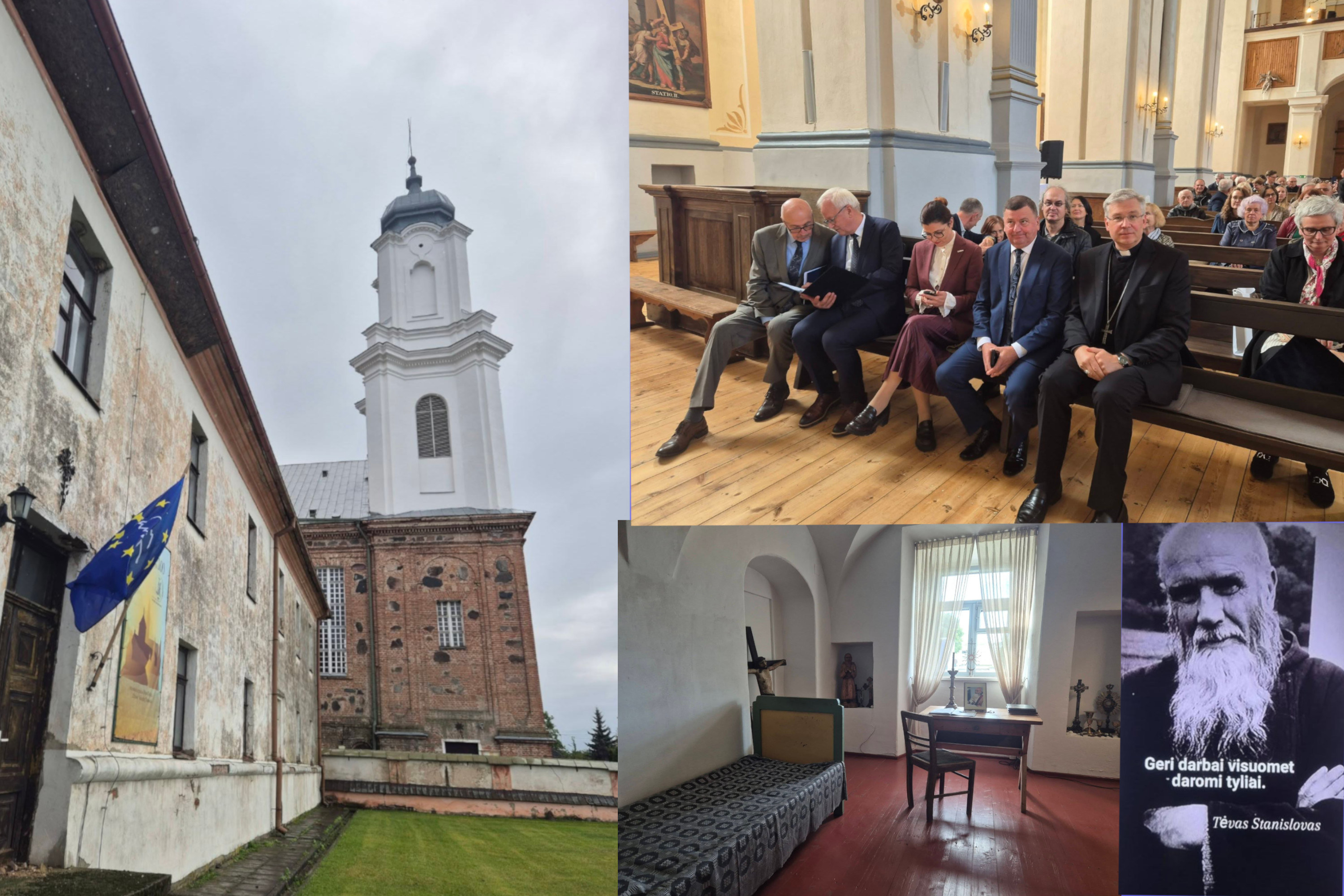
On 17 September, the Department of Cultural Heritage officially opened the European Heritage Days in Dotnuva, at the Church of the Annunciation of the Blessed Virgin Mary. Until 27 September, nearly 300 public and free events will take place across Lithuania, presenting the rich cultural heritage of the country’s cities, towns and villages.
Protect, Preserve, Revive
In his welcoming address, Vidmantas Bezaras, Director of the Department of Cultural Heritage, noted that although recent discussions have often focused on threats to cultural heritage in times of crisis, this year a more neutral yet broad theme was chosen – Protect, Preserve, Revive – encompassing the entire process of heritage conservation.
“If people come together, if they understand the meaning, value and importance of heritage, if they care about it, then heritage will also be saved in times of crisis,” said Vidmantas Bezaras.
“The motto embodied in these three words is reflected perhaps nowhere more clearly than in this church, this monastery and in Paberžė, where the Capuchin friar Father Stanislovas demonstrated it throughout his life, caring not only for heritage but also for people’s emotions and souls. Paberžė bears particularly strong witness to this: during the 24 years of his ministry there, the outlook of many people who visited the place took an entirely new direction.
“After 1990, when Father Stanislovas was transferred to Dotnuva as a Capuchin friar, he also began the work of reviving this monastery. This is probably the most important reason why we have gathered here today, because this place most fully reflects this year’s European Heritage Days motto – Protect, Preserve, Revive.”
European Heritage Days Began in France
Alfredas Jomantas, Head of the International Relations and Heritage Promotion Division of the Department of Cultural Heritage, recalled how the European Heritage Days tradition reached Lithuania.
“In 1991, together with the team of the then Minister of Culture, Darius Kuolys, we travelled to Paris to meet the French Minister of Culture, Jack Lang. He is one of France’s best-known and most prominent culture ministers, whose name remains widely recognised in the country to this day.
“At Jack Lang’s initiative, the first open day at historic monuments – La Journée portes ouvertes dans les monuments historiques – was held in Paris in 1984,” Alfredas Jomantas said.
“During our meeting, Jack Lang told us about the French initiative, which neighbouring countries soon began to join. In 1991, the Council of Europe, with the support of the European Union, brought these national events together under a common European Heritage Days programme. The idea developed into an international initiative and a celebration for the heritage community across Europe.
“Lithuania has celebrated European Heritage Days since 1994. Today, nearly 50 European countries that have joined the initiative take part in this annual cultural event.”
Around 300 events taking place across Lithuania this year demonstrate the strength of the community interested in cultural heritage and its desire to learn more about protected, restored and revitalised heritage sites.
We Too Helped Shape Western Civilisation
At the more than two-hundred-year-old Church of the Annunciation of the Blessed Virgin Mary in Dotnuva, Kęstutis Kėvalas, Metropolitan Archbishop of Kaunas, also addressed the heritage community.
“You are a remarkable community and a remarkable team because you care for what is the pride of our homeland and our country,” Archbishop Kėvalas told those gathered.
“We belong to the European cultural family and to Western civilisation. These and other heritage sites are traces of that great culture which we, too, have helped to create.
“Heritage places us under an obligation to protect, preserve and pass on to the younger generation what we have that is most beautiful and most precious. What is often encoded in heritage sites through symbols are messages that transcend time, reach deep into the heart and speak to people.
“These messages come from the worldview of past generations. They are like letters written to us through magnificent churches, monasteries and other cultural heritage sites – places that today stand as signs of the great love our ancestors had for their land, their culture and, of course, for Europe.
“Thank you for your fellowship and for your support, because only together can we take care of what adorns our homeland and, most importantly, our hearts.”
Last updated: 29-09-2026
Related news:
Baltic Heritage Institutions Share Experience in Tallinn
International Cultural Heritage Residency 2026 at Panemunė Castle
The memory of M. K. Čiurlionis is immortalized at the place of his death near Warsaw
Lithuanian and Polish Heritage Protection Specialists Meet in Toruń