

Council of Europe
The Department takes an active part in the activities and programmes initiated by the Council of Europe. Since 1995 the Department has been involved in the work of CDCPP (Steering Committee for Culture, Heritage and Landscape) which is the main body for intergovernmental cooperation in the field of cultural heritage.
The Department is participating in such programmes of the Council of Europe as European Heritage Days and European Cultural Routes, is represented in the HEREIN network and European Archaeological Council.
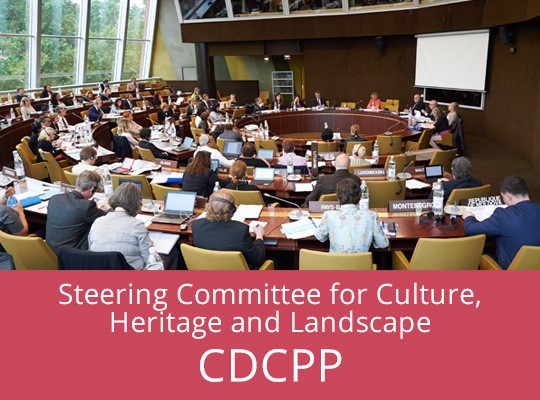
Steering Committee for Culture, Heritage and Landscape – CDCPP). The Council of Europe Steering Committee for Culture, Heritage and Landscape oversees the development and implementation of the Council of Europe Conventions, and within its competence puts forward recommendations to the Council of Europe Committee of Ministers concerning the issues of culture, cultural heritage and landscape policy.
The representative of Lithuania on the Committee and a member of the Bureau of the Committee is Alfredas Jomantas, Head of the Division for International Relations and Cultural Heritage Communication Department.
More information about CDCPP activities is available on the website: https://www.coe.int/en/web/cdcpp-committee
European Heritage Days. European Heritage Days are a joint initiative of the Council of Europe and the European Commission. Started in France, today European Heritage Days take place in 48 countries that are signatories to the European Cultural Convention, they attract more than 30 million visitors each year, and are the largest and most widely celebrated free cultural event involving people from all over Europe.
The European Heritage Days have been organised in Lithuania since 1994 and are the most important national event for the promotion of cultural heritage. The events organised during the European Heritage Days are free of charge and promote understanding of values of cultural heritage, its importance to society and the need to pass it on to future generations. Every year, more than 200 organisers all over Lithuania - city and district municipalities, cultural institutions, private owners and managers of cultural heritage sites, non-governmental organisations and many others - invite people to explore and discover cultural heritage in our everyday environment. Various guided walks take place, meetings with archaeologists, researchers, restorers, architects, art historians and historians, educational activities and workshops, exhibitions and conferences, bike rides and games are organised and conducted. Efforts are made to provide access to cultural heritage sites that are typically closed to regular visitors. Every year, the events of the European Heritage Days are focused on a different theme, and thus on different values of cultural heritage sites.
The National Coordinator of the European Heritage Days in Lithuania is Akvilė Jagminaitė-Markevičienė, Senior Specialist of the International Relations and Heritage Dissemination Unit.
More information about the European Heritage Days in Lithuania is available on the website: www.europospaveldodienos.lt. The European Heritage Days international website: www.europeanheritagedays.com.
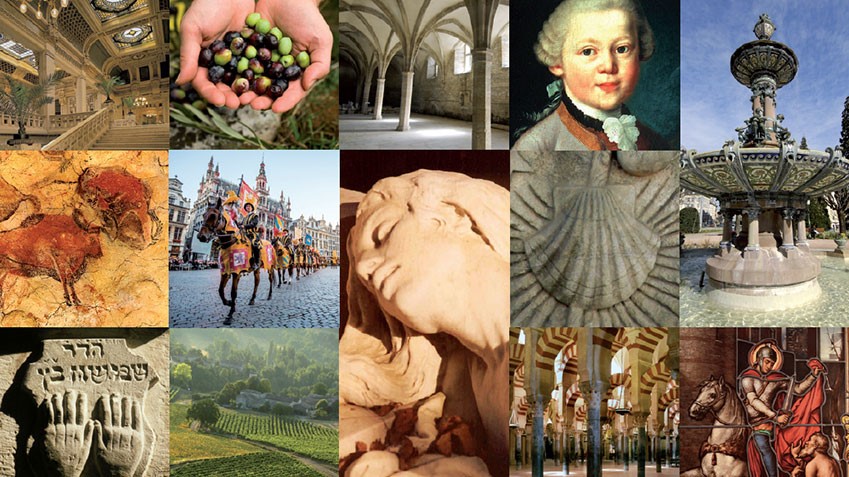
Council of Europe Cultural Routes. The Cultural Route of the Council of Europe Programme was started to be developed in 1987.Thereby it was sought to disclose European cultural identity more comprehensively, to strengthen cultural tourism and enhance cultural cooperation between the countries. The Cultural Route of the Council of Europe is a cultural, educational heritage and tourism cooperation project which aims to develop and promote a single or several itineraries based on a historical route, a cultural concept, a personality or phenomenon of global significance, and which are significant to enhancing understanding of and respect for common European values. In working out the Cultural Routes, particular attention was given to those themes which are relevant to European unity, history, culture and values, and which offer an opportunity to discover lesser-known cultural tourism destinations and routes. In 2024, there are 47 Council of Europe-certified Cultural Routes, covering a wide range of themes illustrating European memory, history and heritage, and highlighting the diversity of contemporary Europe.
Currently Lithuania is a member of six Cultural Routes of the Council of Europe: the European Jewish Heritage Route, the Route of St James, the Impressionist Route, the Hanseatic Route, the European Fairy Tale Route, the European Cultural Route of Reformation. At least several more Cultural Routes stretch across the territory of the Republic of Lithuania - the Iron Curtain Route, the European Cemetery Route, Destination Napoleon, the Atrium Route, the Route of Historic Parks thus opening up the possibilities for Lithuania to join these Council of Europe certified Cultural Routes.
More information about the Cultural Routes of the Council of Europe is available on the website: : https://www.coe.int/en/web/cultural-routes/
Council of Europe Advisory Forums on European Cultural Routes. Since 2011, the Council of Europe Advisory Forums on European Cultural Routes have been held. They are the main event of the year of the Cultural Routes of the Council of Europe Programme bringing together representatives of cultural routes from all the countries participating in the programme. In 2016, the Council of Europe Advisory Forum on European Cultural Routes ‘Expanding the Cultural Routes of the Council of Europe: challenges and opportunities’ was held in Vilnius.
HEREIN. The European Heritage Network HEREIN initiated by the Council of Europe, is an information system on cultural heritage in European countries, the database thereof contains information on European cultural heritage policies, legal frameworks, funding, dissemination, etc. Currently HEREIN includes more than 40 public administration institutions in European countries responsible for national policies in the field of cultural heritage. Each country is represented by a national coordinator who coordinates data collection and data submission to the HEREIN network, and participates in its activities.
Since 2015, Justina Bertulytė, Chief Specialist of the Legal and Personnel Division of the Department of Cultural Heritage, has been appointed HEREIN National Coordinator in Lithuania.
For more information see: https://www.coe.int/en/web/culture-and-heritage/herein-heritage-network
The European Archaeological Council (Latin Europae Archaeologiae Consilium - EAC), founded in 1999, brings together the national organisations of the Member States of the Council of Europe responsible for the management and conservation of archaeological heritage. The main mission of the European Archaeological Council (EAC) is to take care of archaeological heritage of all European countries, collaborating with other international cultural heritage organizations, to provide advisory assistance to national organizations by bringing them together for annual archaeological heritage forums and creating opportunities for constructive cooperation, exchanging legal information and best practices among the countries. The Department of Cultural Heritage under the Ministry of Culture of the Republic of Lithuania joined the EAC organisation in 2004. Representatives of the Department participate in EAC General Assemblies, symposia and workshops organised annually.
Lithuania's representative in the Council is Gediminas Jonutis-Širvys, Chief Specialist of the Methodological Consulting and Territorial Planning Division.
More information about the activities of EAC is available on the website: https://www.europae-archaeologiae-consilium.org/
Last updated: 01-03-2024