

The Development of Heritage Protection in Lithuania
The development of heritage protection in Lithuania and history of the Institution
The beginning of the protection of cultural heritage can be traced back to the Vilnius Temporary Archaeological Commission, established in 1855 and chaired by Eustachius Tiškevičius (Eustachy Tyszkiewicz). This Commission organised and carried out the first archaeological excavations and founded the Museum of Antiquities in Vilnius. However, its activities were amateurish, and after the January Uprising of 1863, the Commission was abolished by the tsarist government.
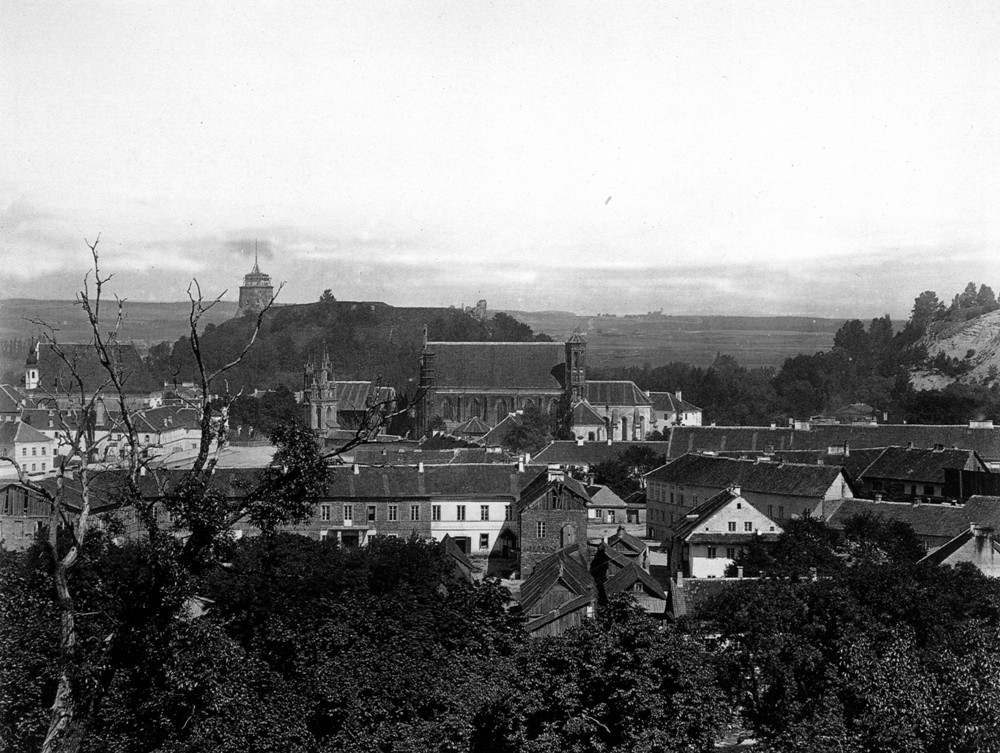
At the beginning of the 20th century, restoration works were carried out on several significant objects of cultural heritage (the Churches of St. Anne and St. Michael in Vilnius were being restored), and the Lithuanian Scientific Society managed to save the tower of the Vilnius Upper Castle from the construction of a water supply reservoir. However, it was not until after the restoration of independence that the systematic protection of objects of cultural heritage was initiated in 1919 when the Law on the State Archaeological Commission was adopted, and Tadas Daugirdas became Chairman of the Commission. This Commission was responsible for the preservation of churches in Pažaislis and Zapyškis (in Kaunas district), collected information about movable and immovable cultural property, and encouraged the protection of archaeological and architectural monuments.
In 1936, after the adoption of the Law on the Vytautas the Great Museum of Culture, office of Conservator of Monuments of Lithuania was created. On the initiative of Paulius Galaunė, the Museum took the lead in the protection of Lithuanian heritage. In the 1930s, the restoration of such sites as Kaunas, Panemunė and Raudonė castles was undertaken.
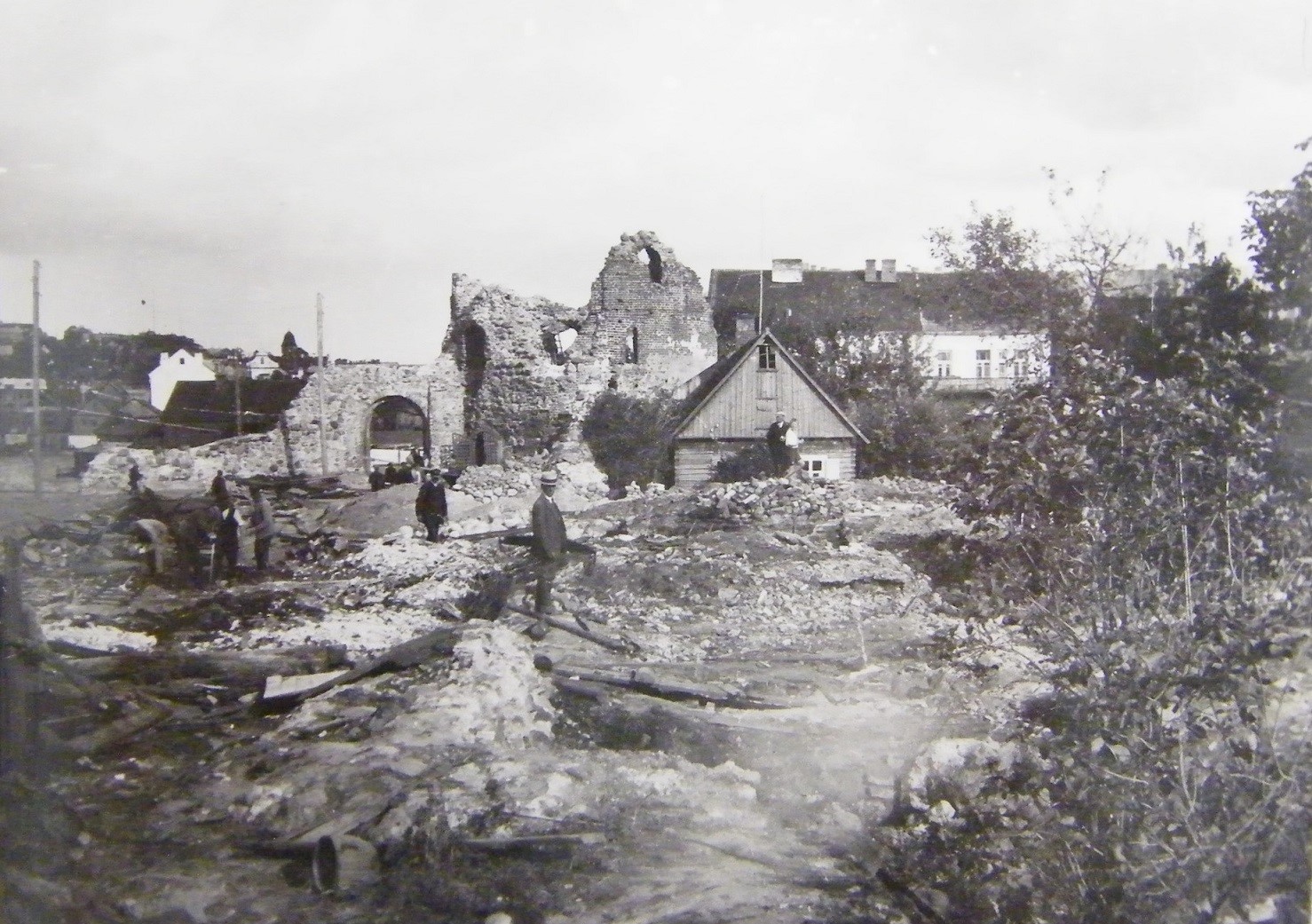
In 1940, the Law on the Protection of Cultural Monuments was adopted, and the Office for the Protection of Cultural Monuments was established to take inventory of cultural property in nationalised estates and hand it over to museums; however, in 1943, the German government stopped its activities. As of 1922, the Polish heritage protection system was in force in Vilnius Region occupied by Poles. Office of the Chief Conservator of Monuments was established for Vilnius Region. Important heritage conservation works were carried out in Vilnius Cathedral, Vilnius University, various churches, Vilnius Upper and Trakai castles.
When the USSR occupied Lithuania again in 1944, an active policy of destructing cultural heritage was pursued: entire villages and their cemeteries, manor homesteads were destroyed, churches and monasteries were closed and ravaged, roadside crosses and shrines were torn down.
In 1949, the Council of Ministers of the Lithuanian SSR approved the Regulations for the Protection of Cultural Monuments, and in 1950, the first Lithuanian organisation for monument conservation work was established - the Scientific Restoration Workshop (during the same year, in 1950, the Statue of Liberty was blown up in Kaune , and the sculptures of saints were demolished from the Cathedral Basilica of St Stanislaus and St Ladislaus in Vilnius). Later this institution became the Republican Cultural Monuments Restoration Trust and the Institute for Monument Conservation.
In 1961, the first list of architectural monuments of national importance was approved, and in 1972, lists of archaeological, historical, architectural, urban planning and fine arts monuments of national and local importance were approved, comprising almost 10,000 objects or their complexes.
In 1967, a new Law on the Protection of Cultural Monuments was adopted. In the same year, the Scientific Methodological Council for the Protection of Cultural Monuments was established, monument inspectorates were set up in Vilnius, Kaunas and Klaipėda, and since 1975 every district has had heritage conservation officer.
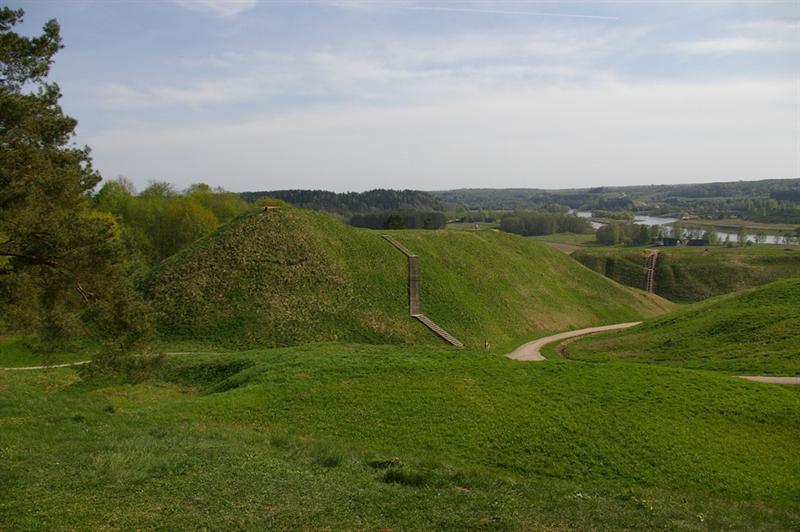
During this period, the institutional framework for heritage conservation in Lithuania was gradually established. The most important works of heritage conservation during the Soviet period were those of Vilnius University and the Church of St John the Baptist and St John the Evangelist, the Church of St Peter and St Paul in Vilnius, the Church of St. Casimir, the Church of St. Anne, the Pažaislis ensemble, Kretinga and Tytuvėnai monasteries. Also, maintenance of Trakai Castle, the old Arsenal building of Vilnius Lower Castle, Biržai, Kaunas, Raudondvaris, Raudonė and Panemunė Castles. The Palanga Manor House, the Verkiai estate, some buildings in the homesteads of Pakruojis, Rokiškis, Taujėnai, Astravas and other manor houses, and the current Presidential Palace in Vilnius were restored. Conservation and reinforcement of hill-forts were begun, and memorial homesteads were started to be conserved and maintained.
In 1990, the Supreme Council of the Republic of Lithuania - the Restoration Seimas adopted the Provisional Law on the Inspectorate of Cultural Heritage Protection; the Inspectorate of Cultural Heritage Protection under the Seimas was established and the Department of Heritage Management was created under the Government of the Republic of Lithuania, the Trust for the Restoration of Monuments of Culture was decentralised. The Law on the Protection of Immovable Cultural Heritage was adopted in 1994 and the Law on the Protection of Movable Cultural Heritage was adopted in 1996. In 1994, the Inspectorate of Cultural Heritage of the Republic of Lithuania and the Department of Heritage Management were reorganised, and the Department of the Protection of Cultural Values was established (since 2005 - the Department of Cultural Heritage). Districts of the Cultural Heritage Inspectorate operating at that time were reorganised into territorial divisions of the Department of Cultural Heritage. As a result of the reorganisation carried out in 2023, the Department of Cultural Heritage took over some of the functions that used to be performed by the Cultural Heritage Centre (organisation of applied scientific research, research necessary for the discovery of valuable properties of immovable cultural heritage, organisation of historical research relating to cultural heritage).
Based on the text Development of Heritage Conservation in Lithuania by Dr Jonas Glemža.
Institutional leaders:
Jonas Glemža 1994 - 1997
Naglis Puteikis 1997
Diana Varnaitė 1997-2005
Albinas Kuncevičius – 2005-2008
Diana Varnaitė 2008-2018
Vidmantas Bezaras 2018-up to now
Last updated: 26-02-2024